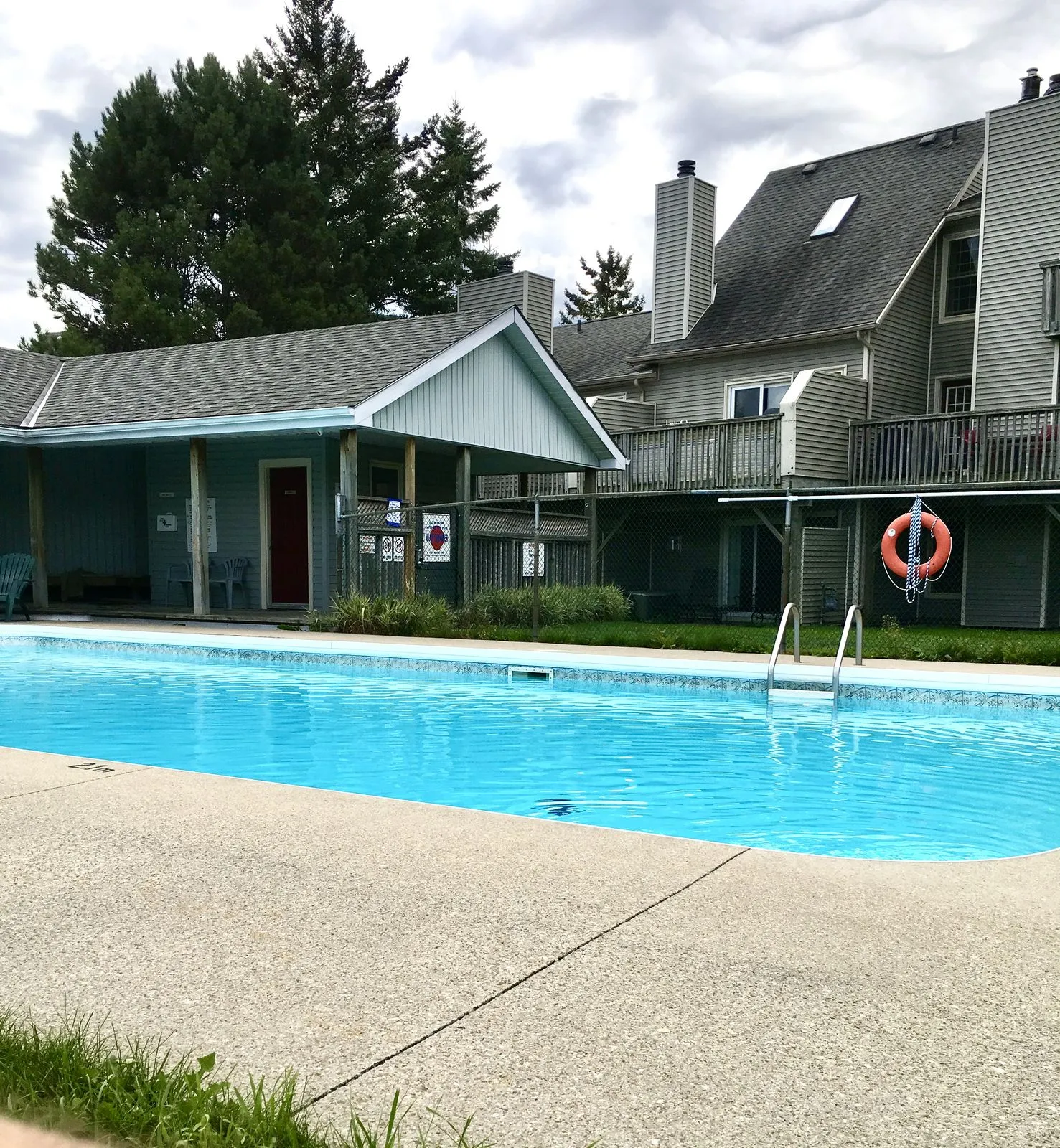
You buy into one phase, but you swim in pools that belong to all of them. Every Applejack phase is its own condominium with its own board, budget and bank account - so the pools, the courts and the clubhouse sit on a structure worth understanding, especially if you ever rent your unit out.
What is there
The amenity set, in the middle of the community: two outdoor pools (at least one heated), tennis courts, pickleball, basketball nets, and a clubhouse with a social room and kitchen that owners can rent for private functions. Visitor parking, and barbecues are permitted.
On a good summer evening the courts are the social centre of the place - the same handful of people, most weeks, sorting out who is playing next.
Who owns them: all six, together
The amenities belong to no single corporation. A formal agreement between all six - in place since 2006 - defines the shared facilities, sets out how they are run, and splits the cost. The mechanics are genuinely tidy:
- A committee with one representative from each of the six corporations runs the shared facilities, meeting at least quarterly.
- It sets an annual shared budget, delivered to every corporation before each fiscal year, and each board approves it.
- Each corporation folds its share into its own fees and pays monthly. As an owner you never see a separate amenity bill - it is inside your condo fee.
- There is a separate reserve fund just for the shared facilities, with engineering reviews, on top of your own corporation’s reserve.
- Adding anything new takes unanimity - all six corporations agreeing. Which is why the amenity set has been stable for decades, and why nobody should promise you a future hot tub.
The striking part: every unit pays the same
Cost is split by unit count, full stop. A modest bungalow on Victoria Street contributes exactly what the largest home in the Woods does. Not proportional to size, not to value - per unit, equal. Depending on which unit you own, that is either a quiet bargain or a small subsidy you are paying, and almost nobody who lives here has ever thought about it.
The clause that bites landlords - or mostly does not
Buried in the arrangement is a provision most owners have never read: when you lease your unit, the amenity rights go with it. Your tenant swims; you do not, for the length of the lease.
For a summer landlord, that is a real trade. For a ski season rental, it is close to painless - the marquee amenities are outdoor pools and courts, which spend the winter under snow. One more reason the seasonal rental is the configuration that fits this community best.
Living with the rules
The amenities run on a tag system, with guest limits, posted hours and the usual pool-deck rules - no lifeguard, so children must be accompanied. Courts have proper-footwear rules and a courtesy limit when others are waiting. The clubhouse rents for private functions with a cleaning deposit, and one detail I love because of what it reveals: there is no parking at the clubhouse - you walk over, and you park back at your own phase. Even the parking knows Applejack is several communities wearing one name.
What to check before you buy
Two things worth a buyer’s attention: the shared facilities have their own budget and reserve fund, so the health of both funds - your corporation’s and the shared one - is part of your purchase. And if amenity access matters to your plans, especially around renting, understand the leasing clause above. A status certificate and its attachments are where the current state of all of this lives.
Brad Macdonald, Broker
The MAC Team · REMAX All-Stars Realty Inc. Brokerage